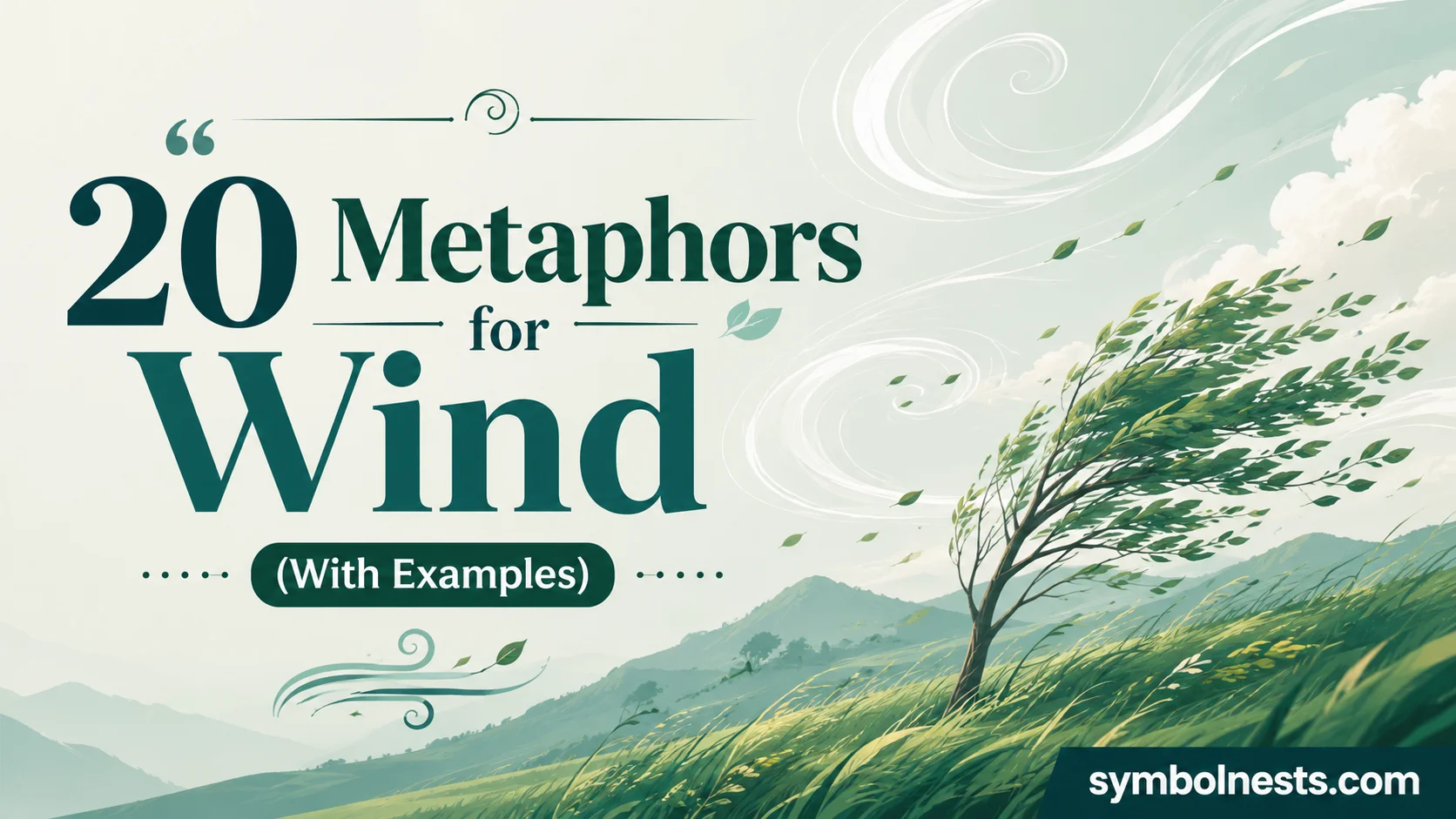
Metaphors for Wind make descriptions of the wind more vivid and memorable.
They help readers imagine its movement, mood, and power clearly.
A gentle breeze can feel playful, while a storm can seem strong and mysterious.
These comparisons make simple writing more expressive and engaging.
Wind is invisible, but we can feel, hear, and see its effects around us.
Writers can describe it as a whisper, a wild beast, or a mighty warrior.
Such images help bring stories, poems, and everyday observations to life.
They also give readers a clearer picture of how the wind feels.
Using the right metaphor can add depth, emotion, and personality to writing.
It can make an ordinary sentence feel more interesting and memorable.
Whether you are writing poetry, fiction, or an essay, fresh comparisons can help.
With creative language, the wind can truly feel like it has a life of its own.
1. Wind Is a Whisper
Meaning
“Wind is a whisper” compares a soft breeze to a quiet human voice.
Detailed Explanation
This metaphor works best when the wind moves gently through trees, grass, curtains, or open windows. It creates an image of something soft, secretive, and peaceful. Instead of making the wind seem powerful, it gives it a delicate personality. The comparison can also create a calm or slightly mysterious atmosphere in a scene.
Example in a Sentence
At dawn, the wind was a whisper, brushing softly against the bedroom window.
3 Other Ways to Say It
- The wind was a quiet voice.
- The breeze was a soft murmur.
- The air moved like a gentle secret.
2. Wind Is a Dancer
Meaning
“Wind is a dancer” compares the wind to someone moving freely, gracefully, and unpredictably.
Detailed Explanation
Wind rarely follows a perfectly straight path. It twists around buildings, moves through branches, lifts leaves, and changes direction without warning. Calling it a dancer highlights this graceful movement. The metaphor is especially useful when describing a pleasant breeze that makes nature appear alive.
Example in a Sentence
The wind was a dancer, spinning fallen leaves across the quiet street.
3 Other Ways to Say It
- The breeze twirled through the trees.
- The wind moved like a graceful performer.
- The air danced among the leaves.
3. Wind Is a Messenger
Meaning
“Wind is a messenger” presents the wind as something that carries signs, sounds, scents, or changes from one place to another.
Detailed Explanation
Wind can carry the smell of rain, the scent of flowers, distant sounds, or the chill of approaching weather. This makes the metaphor feel curious and meaningful. It suggests that the wind brings information without speaking directly. Writers can use it when a change in the environment seems to announce something coming.
Example in a Sentence
The wind was a messenger, carrying the fresh scent of rain from the hills.
3 Other Ways to Say It
- The breeze carried news of the storm.
- The wind brought signs of change.
- The air was a carrier of distant scents.
4. Wind Is a Wild Horse
Meaning
“Wind is a wild horse” compares strong, uncontrolled wind to an untamed animal.
Detailed Explanation
A wild horse suggests freedom, strength, speed, and unpredictability. This metaphor makes the wind feel energetic rather than calm. It works particularly well when describing gusts racing across open land or stormy weather pushing against trees and buildings.
Example in a Sentence
Across the empty fields, the wind was a wild horse, racing wherever it pleased.
3 Other Ways to Say It
- The wind was an untamed runner.
- The gusts moved like a runaway horse.
- The breeze charged across the land like a wild animal.
5. Wind Is an Invisible River
Meaning
“Wind is an invisible river” compares moving air to flowing water.
Detailed Explanation
A river has direction, movement, and currents, even though wind cannot be seen in the same way. We can understand its path by watching leaves, grass, clouds, dust, or curtains respond to it. This metaphor emphasizes the continuous flow of air around us. It is especially effective in descriptive writing because it gives something invisible a physical shape.
Example in a Sentence
The wind was an invisible river, flowing steadily between the houses.
3 Other Ways to Say It
- The air was a hidden current.
- The breeze flowed like an unseen stream.
- Wind moved through the valley like a silent river.
6. Wind Is Nature’s Breath
Meaning
“Wind is nature’s breath” compares moving air to the breathing of the natural world.
Detailed Explanation
Breathing suggests life, rhythm, and renewal. When the wind moves through forests, fields, or mountains, this metaphor makes nature seem alive. A gentle breeze can feel like the earth taking a slow breath. The comparison is useful for peaceful, reflective, and nature-focused writing.
Example in a Sentence
As evening settled over the forest, the wind became nature’s breath, cool and steady among the trees.
3 Other Ways to Say It
- The breeze was the breath of the earth.
- The forest seemed to breathe through the wind.
- The air felt like nature breathing softly.
7. Wind Is a Playful Child
Meaning
“Wind is a playful child” describes the wind as curious, energetic, and mischievous.
Detailed Explanation
A playful child may run around, change direction, disturb things, and never stay still for long. The wind can behave in a similar way when it tugs at clothing, scatters papers, shakes branches, or sends leaves rolling down a sidewalk. This metaphor gives the wind a cheerful personality.
Example in a Sentence
The wind was a playful child, tugging at my hat before darting around the corner.
3 Other Ways to Say It
- The breeze was a mischievous little companion.
- The wind behaved like a restless child.
- The air was playing tricks on everyone.
8. Wind Is a Storm’s Voice
Meaning
“Wind is a storm’s voice” compares the sound of strong wind to the voice of an approaching or active storm.
Detailed Explanation
During severe weather, wind can roar, whistle, howl, or pound against windows. This metaphor gives the storm a voice and presence. It suggests that the wind communicates the storm’s strength even before rain or lightning becomes obvious.
Example in a Sentence
Outside the cabin, the wind was the storm’s voice, howling through the dark trees.
3 Other Ways to Say It
- The wind was the storm’s warning cry.
- The gusts sounded like a weather alarm.
- The storm spoke through the roaring air.
9. Wind Is a Restless Traveler
Meaning
“Wind is a restless traveler” compares constantly moving air to someone who never wants to stay in one place.
Detailed Explanation
Wind moves across mountains, oceans, cities, fields, and forests without needing roads or borders. Calling it a traveler emphasizes its freedom and constant movement. The word “restless” adds the idea that it cannot settle down for long.
Example in a Sentence
The wind was a restless traveler, crossing the valley before disappearing into the hills.
3 Other Ways to Say It
- The breeze was an endless wanderer.
- The wind moved like a traveler without a destination.
- The air was always on the move.
10. Wind Is a Painter
Meaning
“Wind is a painter” compares the wind to an artist that creates visible patterns through movement.
Detailed Explanation
Wind can reshape dunes, bend grass, ripple water, scatter leaves, and move clouds across the sky. Although the wind itself remains invisible, its effects can create changing pictures in the landscape. This metaphor highlights the creative side of natural movement.
Example in a Sentence
On the lake, the wind was a painter, covering the water with silver ripples.
3 Other Ways to Say It
- The breeze painted patterns across the water.
- The wind was an artist of the landscape.
- The air drew moving shapes across the field.
11. Wind Is a Thief
Meaning
“Wind is a thief” describes the wind as something that suddenly takes or carries things away.
Detailed Explanation
Strong gusts can steal hats, papers, leaves, umbrellas, and even lightweight objects. The metaphor gives the wind a mischievous and slightly troublesome personality. It is useful when you want to describe an unexpected gust in a playful way.
Example in a Sentence
The wind was a thief, snatching the note from my hand before I could fold it.
3 Other Ways to Say It
- The gust stole my hat.
- The breeze was a sneaky taker.
- The wind carried my paper away like a thief.
12. Wind Is a Messenger of Change
Meaning
“Wind is a messenger of change” compares the wind to a signal that announces something new is happening.
Detailed Explanation
A sudden change in wind can make people notice a shift in weather or season. A cool breeze may suggest autumn, while warm air can hint at summer. This metaphor goes beyond physical movement and connects wind with transition, expectation, and transformation.
Example in a Sentence
The first cool breeze arrived, and the wind became a messenger of change, announcing the end of summer.
3 Other Ways to Say It
- The breeze was a sign of a new season.
- The wind announced an approaching change.
- The air carried a feeling of transition.
13. Wind Is a Giant’s Hand
Meaning
“Wind is a giant’s hand” compares powerful gusts to the enormous hand of an unseen giant.
Detailed Explanation
This metaphor makes strong wind feel large, physical, and forceful. When trees bend or doors shake during heavy gusts, it can seem as though an invisible hand is pushing everything around. The image works especially well in dramatic descriptions.
Example in a Sentence
The wind was a giant’s hand, bending the tall trees toward the ground.
3 Other Ways to Say It
- The gusts felt like an invisible giant pushing the forest.
- The wind was a powerful unseen hand.
- The air pressed against the trees like a giant’s palm.
14. Wind Is a Silver Thread
Meaning
“Wind is a silver thread” presents a gentle breeze as a thin, delicate force connecting different parts of a scene.
Detailed Explanation
A thread is fine, continuous, and able to connect things. This metaphor works beautifully for a cool breeze moving between people, trees, curtains, or fields. It creates a softer image than metaphors involving storms or powerful animals.
Example in a Sentence
A cool breeze slipped through the open windows like a silver thread connecting the rooms.
3 Other Ways to Say It
- The breeze was a delicate strand of air.
- The wind formed an invisible thread through the house.
- Cool air moved like a thin ribbon.
15. Wind Is a Secret Keeper
Meaning
“Wind is a secret keeper” compares the wind to someone who quietly carries hidden sounds, scents, and stories.
Detailed Explanation
Wind passes through countless places without revealing everything it encounters. It may carry the smell of a distant garden or the faint sound of activity from far away. The metaphor gives the wind a mysterious and thoughtful personality.
Example in a Sentence
The wind was a secret keeper, carrying the scent of pine from a forest beyond the ridge.
3 Other Ways to Say It
- The breeze carried hidden stories.
- The wind was a quiet keeper of distant scents.
- The air seemed to hold secrets from faraway places.
16. Wind Is a Messenger From the Sea
Meaning
“Wind is a messenger from the sea” describes ocean air as something that brings the sea’s presence inland.
Detailed Explanation
A coastal breeze can carry the smell of salt, the coolness of water, and the feeling of open space. Even far from the shoreline, that air can remind someone of the ocean. The metaphor gives the wind an emotional connection to another place.
Example in a Sentence
When the salty breeze reached the town, the wind felt like a messenger from the sea.
3 Other Ways to Say It
- The breeze carried the ocean inland.
- The wind brought a taste of the sea.
- The air was a reminder of the distant coast.
17. Wind Is a Wild Orchestra
Meaning
“Wind is a wild orchestra” compares the sounds created by moving air to music played by many instruments.
Detailed Explanation
Wind can make different sounds as it passes through branches, windows, fences, wires, mountains, and narrow streets. Each surface changes the sound. Calling it an orchestra emphasizes the variety and rhythm of those natural noises.
Example in a Sentence
As the storm grew stronger, the wind became a wild orchestra, filling the night with whistles and deep rumbles.
3 Other Ways to Say It
- The gusts created a natural symphony.
- The trees and windows became instruments for the wind.
- The storm produced a strange concert of sounds.
18. Wind Is a Freedom Song
Meaning
“Wind is a freedom song” compares the wind to a song that represents independence and unrestricted movement.
Detailed Explanation
Wind travels wherever natural forces carry it. It does not need a road, gate, or border. This makes it a powerful symbol of freedom, independence, and movement. The metaphor works particularly well in reflective or inspirational writing.
Example in a Sentence
Standing on the hill, she listened to the wind as a freedom song moving across the open land.
3 Other Ways to Say It
- The breeze sounded like a song of freedom.
- The wind carried the feeling of independence.
- The open air felt like freedom in motion.
19. Wind Is an Unseen Sculptor
Meaning
“Wind is an unseen sculptor” compares the wind to an artist that gradually shapes the world.
Detailed Explanation
Over time, wind can change landscapes by moving sand, wearing down surfaces, and influencing the shape of natural formations. We cannot watch the wind carving every change, but we can see its long-term effects. This metaphor emphasizes patience, power, and invisible influence.
Example in a Sentence
For centuries, the wind has been an unseen sculptor, shaping the desert dunes one grain at a time.
3 Other Ways to Say It
- The breeze is a silent artist of the land.
- Wind carves the landscape without a visible tool.
- The air acts like an invisible sculptor.
20. Wind Is a Moving Spirit
Meaning
“Wind is a moving spirit” compares the wind to an invisible presence that moves freely through the world.
Detailed Explanation
This metaphor focuses on the strange fact that wind has movement without a visible body. You can feel it on your skin, hear it around you, and observe what it does, yet you cannot hold it in your hands. The image gives wind an almost living quality and works well in poetic, reflective, or imaginative writing.
Example in a Sentence
Through the quiet meadow, the wind felt like a moving spirit, passing gently between the wildflowers.
3 Other Ways to Say It
- The breeze was an invisible presence.
- The wind moved like a wandering spirit.
- The air felt like a living force passing through the land.
Exercise to Practice
1. Which metaphor compares wind to a quiet human voice?
A. Wind is a wild horse
B. Wind is a whisper
C. Wind is a giant’s hand
D. Wind is a wild orchestra
2. In the metaphor “wind is a dancer,” what quality of wind is emphasized?
A. Its ability to move gracefully and unpredictably
B. Its ability to create heavy rain
C. Its ability to disappear underground
D. Its ability to remain completely still
3. Which metaphor best describes wind carrying the scent of rain from a distant place?
A. Wind is a thief
B. Wind is a painter
C. Wind is a messenger
D. Wind is a wild horse
4. Which metaphor presents strong wind as powerful and untamed?
A. Wind is a silver thread
B. Wind is a wild horse
C. Wind is a secret keeper
D. Wind is a whisper
5. What does “wind is an invisible river” mainly emphasize?
A. The wind is always cold
B. The wind sounds like water
C. The wind flows and moves like a current
D. The wind only occurs near rivers
6. Which sentence uses “wind is nature’s breath” correctly?
A. The wind was nature’s breath, gently moving through the forest.
B. The wind was nature’s breath because it destroyed the building.
C. The wind was nature’s breath, so nobody could hear it.
D. The wind was nature’s breath because it turned into rain.
7. What personality does “wind is a playful child” give the wind?
A. Serious and formal
B. Mischievous and energetic
C. Lonely and frightened
D. Slow and sleepy
8. Which metaphor would best fit the sound of powerful wind during a storm?
A. Wind is a silver thread
B. Wind is a storm’s voice
C. Wind is a freedom song
D. Wind is a messenger from the sea
9. A writer describes wind moving from one location to another without stopping. Which metaphor would fit best?
A. Wind is a restless traveler
B. Wind is a whisper
C. Wind is a painter
D. Wind is nature’s breath
10. Which metaphor focuses on the wind creating visible patterns on water, sand, or grass?
A. Wind is a thief
B. Wind is a painter
C. Wind is a secret keeper
D. Wind is a giant’s hand
Answer Key:
- B | 2. A | 3. C | 4. B | 5. C | 6. A | 7. B | 8. B | 9. A | 10. B
Conclusion
Metaphors for Wind help turn an invisible force of nature into something readers can easily imagine. They can show the wind as gentle, playful, powerful, mysterious, or restless. Using these creative comparisons makes writing more vivid, expressive, and memorable.Whether you are writing a poem, story, essay, or school assignment, the right metaphor can give your words more life. Simple images can help readers not only understand the wind but also feel its movement and emotion.
FAQs
Q1. What is a metaphor for wind?
A metaphor for wind directly compares wind to something familiar, such as a whisper, wild beast, or playful child, to create a vivid image.
Q2. What is a good metaphor for strong wind?
A strong wind can be described as a mighty warrior because this image suggests strength, force, and powerful movement.
Q3. How do metaphors make wind descriptions better?
Metaphors make descriptions more vivid and memorable by helping readers imagine how the wind moves, sounds, and feels.
Q4. Can wind metaphors be used in poetry?
Yes. Wind metaphors work especially well in poetry because they can express freedom, change, emotions, movement, and mystery.
Q5. What is the difference between a wind metaphor and a simile?
A metaphor makes a direct comparison, such as “The wind is a whisper.” A simile uses words such as “like” or “as,” such as “The wind moves like a whisper.”












2 thoughts on “20 Metaphors for Wind (With Examples)”